He’s a Bad Dog!
There is a lot that has been said about the mantra, “Three days, three weeks, three months.” which refers to the idea that when adopting a dog, one should be aware of the adjustment period that the dog needs to settle in to their new home. And because some folks have taken this literally, many well known canine professionals are sounding the alarm, especially with so many dogs being returned to shelters, disposed of on the streets or even euthanized!
Dr. Trish McConnell, a Certified Applied Animal Behaviorist and awarding winning author, wrote about the “magic of threes” many years ago on her blog, but she emphasized that in her own home, even when she saw a noticeable adjustment in her adopted dogs after several months, she confessed that sometimes it took a year or so for her dogs to feel comfortable.
Much depends on the dog’s history, age, training, etc. that occurred prior to being adopted, but from where I’m sitting, we should be looking at THE OTHER END OF THE LEASH to understand that among the many human failings when it comes to raising dogs, we don’t read dogs’ communications well, if at all. And this means that the average dog guardian, seems to use their “creative license” to make things up!
Years ago, I attended a weekend seminar where we had the opportunity to inquire what it is to be human. One of my favorite exercises was being able to observe volunteers act out a scene on stage. Given that the actors could not use verbal language, the audience had to guess what was going on, based on the actors’ body language.
Some spectators said that the couple was having a fight, others mentioned that one person was upset because the other person was late coming home and still others said that the couple was not showing any conflict and was actually having a pleasant conversation about their day. These were just a few samplings of what the audience members said they witnessed.
But at the end of the exercise, the seminar leader confessed that the observations were not right or wrong, but rather, made up since they had no way of knowing without hearing the dialogue!
I found this so impactful, not only in dealing with other humans, but also, as a professional animal behaviorist, because humans, MAKE THINGS UP about their dogs’ behavior too, especially the “bad” behavior!
And yes, here’s where I will digress…
I adopted my little Bully mix dog about a year and a half ago. He seemed to make himself at home right away, but that didn’t stop me from keeping my guard up, because behaviors change and I wanted to make sure he was who he “said” he was, so to speak :)
It took 5 months for him to even notice we had a cat and when he did, oh boy was he having fun chasing the cat around the house. The only up side was the cat was faster, and as I observed, he was the one initiating this amusing game. It took an additional 10 months for my dog to begin chewing the baseboards and sampling the drywall!
When I’d mention his behavior to friends and family, some said, for instance, that my dog was acting out, was spoiled, was trying to be the boss and in general he was a very bad dog!
The common thread here is that “acting out, being spoiled, being the boss and or being a bad dog” are labels of which there are no remedies!
Of course I was upset about my dog’s behavior, but the starting point wasn’t calling him names, although, believe me I had a few choice unspoken words. The starting point was looking for context, since he didn’t exhibit the behavior when I was away previously, so I needed to uncover what had changed in the environment as well as what needs had been previously met that were no longer being satisfied.
Based on the timing of his new destructive behavior, I have reason to believe that with Chicago’s ridiculously cold weather these last few weeks, this poor guy’s need for exercise were not being met! I have since increased his puzzle games for brain enrichment as well as I set up some low-impact agility and scent games; so far the behavior has not reappeared, although I will continue to observe him via my new “spy camera” which I highly recommend for anyone whose dog shows behavior changes.
When clients’ dogs have these and other undesirable behaviors, the sad thing, in addition to those who would rather return their dogs to the shelter, are the the punitive steps they typically take prior to reaching out for help which, as the saying goes, “Adds insult to injury.”
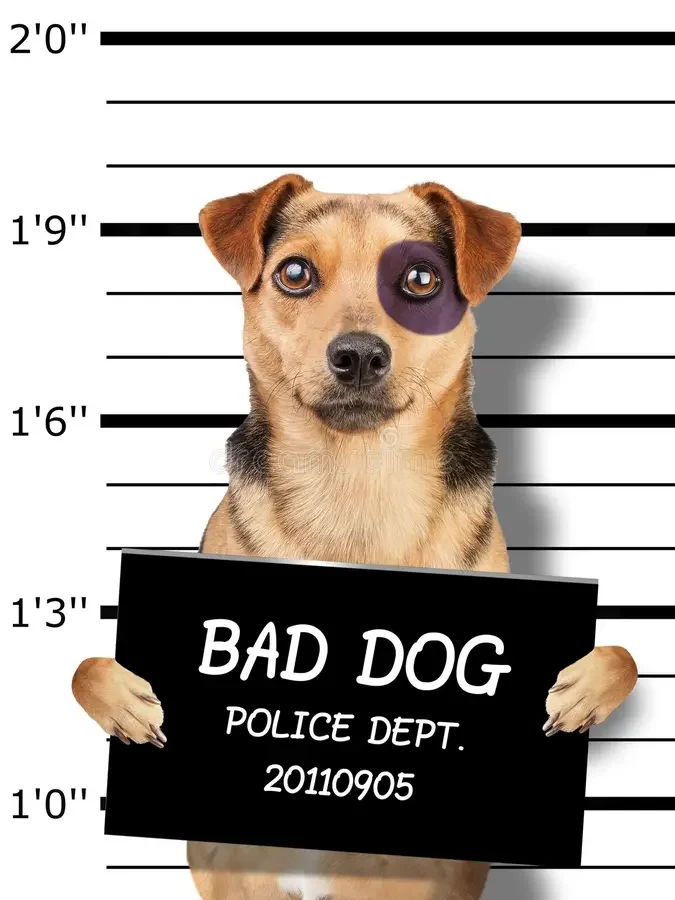
Regardless of the seemingly cute memes that we’ve all seen on Facebook and Instagram, dog guardians do NOT have a bad dog, but rather a behavior that they have labeled, and have no clue what the poor dog is actually communicating.
If you’ve recently adopted a dog, please give them lots of time to feel safe and loved. Make notes of the behavior you’ve observed and find a professional who actually knows how to decipher dog language.
In the meantime, whatever you do, don’t call your dog bad, not only because that will not tell you how to resolve the real issue, but it really damages your relationship and sometimes your drywall if you don’t understand the root of the behavior!
HAPPY TRAINING & ENLIGHTENMENT!